
A used truck becomes a fleet asset only after its technical condition, paperwork, and delivery status are aligned with day-to-day operating requirements… A sale listing alone says little about whether the vehicle can be put to work without disruption. The real issue is the gap between commercial availability and operational readiness. That is why it is important to understand the process of trucks preparation.
What Dealers Check First When a Vehicle Arrives?
The first step after a vehicle enters dealer stock is assessment, because the dealer needs to establish what can be corrected efficiently, what documentation is available, and how close the truck already is to deployment status. Without that baseline, later work becomes harder to scope and harder to explain to the buyer. The review usually covers technical condition, visible wear, completeness of documents, and the practical suitability of the vehicle for expected fleet use, which allows the dealer to define the real preparation path instead of relying on assumptions.
Documentation has to be checked just as early as the mechanical side, since a truck that is technically sound can still be delayed by missing or incomplete registration-related paperwork, inspection requirements, or export formalities. Dealers involved in cross-border sales have even less room to postpone these checks, because timing at handover depends on administrative readiness as much as on workshop work.
At the end of this stage, the dealer should know the scope of preparation, the likely timeline, and the route to delivery, which creates a much firmer basis for the next steps.
How Technical Work Change Truck into a Fleet-Ready Asset
Once the assessment defines what needs attention, technical preparation turns from a general inspection result into a set of concrete corrective actions that determine whether the vehicle can move into fleet service without immediate follow-up issues. The purpose is to bring the truck to a dependable operating condition, not to expand the work beyond what supports actual deployment. This stage depends on consistency, especially where a dealer handles multiple vehicle categories and leading brands under one stock model, because readiness has to be judged by the same internal standard even when the units differ in body type or use profile. That consistency is what allows a buyer to evaluate vehicles across a mixed inventory with fewer unknowns.
Mechanical Repairs
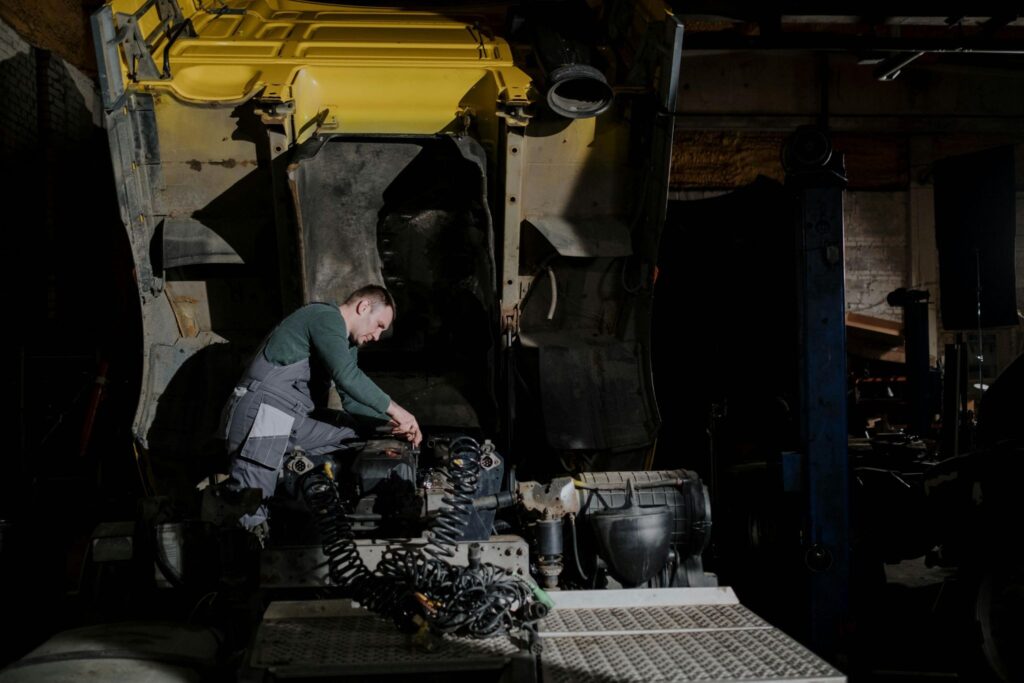
Mechanical work is usually selective and targeted, since the dealer is addressing faults and wear identified during intake rather than rebuilding the vehicle beyond operational need. The focus remains on issues that affect drivability, safety, and immediate serviceability. That often means correcting defects that would otherwise shorten the time between delivery and the first unplanned stop, while also removing obvious condition issues that undermine confidence in the vehicle’s stated readiness. The value of this step lies in narrowing the gap between declared condition and real usability.
A dealer with a wide, multi-brand inventory needs discipline here, because consistency becomes difficult when stock spans manufacturers such as Scania, Volvo, Mercedes-Benz, DAF, MAN, and Renault across several commercial vehicle formats.And this is an example of good dealer such as Engeros (https://www.engeros.com/en), that makes standardized preparation logic especially important, since the sales process depends on presenting varied stock through a coherent operational model.
Documents, Registration, and Delivery Readiness
Technical work alone does not make a truck deployable, because the vehicle still needs to be cleared through the documentation and handover steps that allow it to move legally and practically toward the buyer. This part of preparation often determines whether an otherwise ready truck can actually leave stock on schedule.
The administrative side may include registration support, transit numbers, MOT, and related export documents, each of which affects whether the vehicle can be transferred without delay. When these elements are handled late or inconsistently, the handover process becomes harder to predict even if the truck itself is already prepared. When dealers integrate these tasks into the main preparation workflow, they reduce the number of separate handoffs between technical, sales, and administrative stages.
Standardization Makes Deployment Easier for Fleet Operators
For fleet operators, the real advantage of dealer preparation lies in standardization, because each additional variation in vehicle condition or paperwork creates extra internal work after purchase. A truck that arrives with predictable readiness is easier to absorb into operating schedules than one that still carries unresolved uncertainty.
This matters even more when vehicles are added over time rather than bought in a single block, since inconsistent preparation standards make every new handover a separate verification exercise. The result is more checking, more coordination, and a greater chance that minor omissions will delay entry into service. A standardized process reduces that friction by shifting part of the integration effort to the dealer side, where inspection, repair scope, documentation checks, and release planning can be managed before the vehicle reaches the operator.
Process Quality Still Matters Most
The final handover is the point where every earlier decision becomes visible, because weak assessment, uneven technical work, or incomplete paperwork tend to surface at the moment the vehicle is supposed to leave stock and enter use. Process quality is measured here less by presentation than by whether the truck can move forward without last-minute corrections.
What matters most is alignment between physical readiness, document status, and delivery logistics, since any mismatch between those elements can stop deployment even when the sale itself is complete. A vehicle is not truly prepared until those parts support each other in one clear sequence.
That is why dealer preparation should be understood as a connected workflow, especially in the used truck market where condition, paperwork, and timing rarely arrive in perfect order. When all stages stages are managed together, handover becomes more predictable and fleet deployment starts with fewer avoidable complications.